
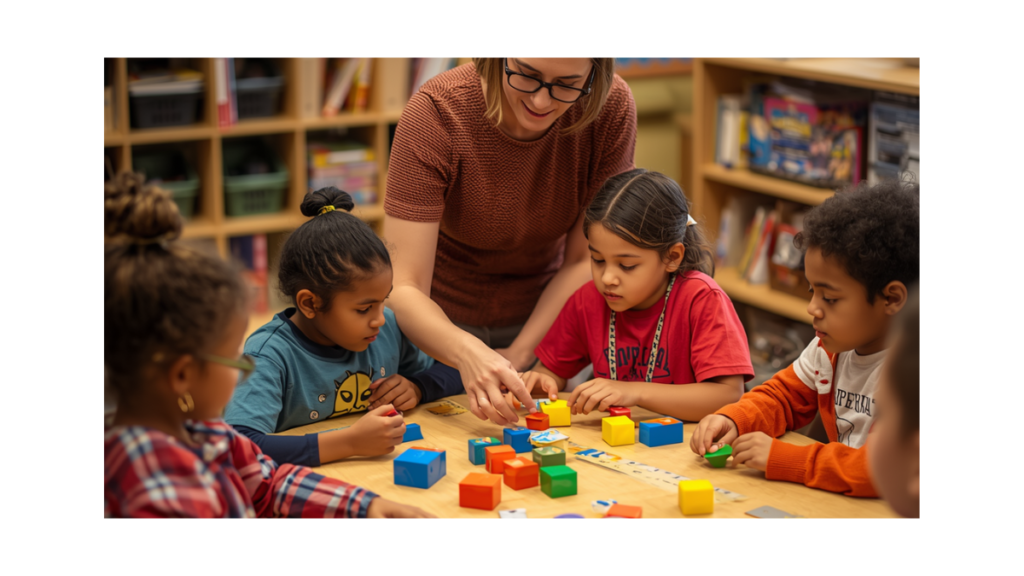
Learning how to teach measurement in kindergarten and early grades is an essential part of developing strong early math skills. Measurement helps students understand size, length, height, weight, and comparison using real-world objects and hands-on activities.
In early childhood classrooms, measurement should be taught using simple, low-tech, and practical strategies that allow students to explore and learn through experience.
Why Measurement is Important in Early Grades
Measurement builds the foundation for many future math concepts. When students learn how to compare and measure objects, they develop critical thinking and problem-solving skills.
Understanding measurement help students:
- Compare objects (bigger, smaller, longer, shorter)
- Understand spatial awareness
- Build vocabulary related to size and quantity
- Prepare for formal math concepts in later grades
1. Start with Non-Standard Measurement
A key step in how to teach measurement in kindergarten is starting with non-standard units.
Instead of rulers, students can use:
- Blocks
- Paper clips
- Counters
- Pencils
For example:
“How many blocks long is the table?”
This helps students understand measurement concepts without focusing on numbers too early.
2. Compare Objects (Big, Small, Tall, Short)
Before introducing formal measurement tools, students should learn comparison skills.
Activities include:
- Identifying the bigger or smaller object
- Comparing heights of classroom items
- Sorting objects by size
These simple activities help build a strong understanding of measurement vocabulary.
3. Hands-On Measurement Activities
Hands-on learning is one of the most effective ways to teach measurement in early grades.
Try activities such as:
- Measuring classroom objects with cubes or blocks
- Measuring books, pencils, or desks
- Working in pairs to compare results
These activities make learning interactive and engaging while reinforcing key concepts.
4. Introduce Simple Rulers (Grade 1-2)
Once students understand basic measurement concepts, you can introduce rulers.
Start with:
- Measuring in centimeters
- Simple straight-line measurements
- Recording results on paper
Keep instructions simple and model each step clearly.
5. Estimate and Measure
Estimation is an important skill in early measurement learning.
Ask students to:
- Guess the length of an object
- Measure it afterward
- Compare their estimate to the actual result
This helps students develop reasoning and number sense.
6. Measurement Through Group Activities
Group work helps reinforce how to teach measurement in kindergarten and early grades.
Examples include:
- Measuring classroom items in teams
- Comparing results with classmates
- Discussing which objects are longer or shorter
Peer interaction encourages discussion and deeper understanding.
7. Connect Measurement to Real Life
To make learning meaningful, connect measurement to everyday experiences.
Examples:
- Measuring classroom furniture
- Comparing heights of students (safely and respectfully)
- Talking about size in real-world contexts
This helps students understand that math is used outside the classroom.
Common Mistakes to Avoid
When teaching measurement in early grades, avoid:
- Introducing rulers too early
- Skipping hands-on experience
- Overcomplicating instructions
- Expecting accuracy before understanding concepts
Keep lessons simple and developmentally appropriate.
Putting it Into Practice
To effectively teach measurement in kindergarten and early grades, start with hands-on comparison activities and non-standard measurement tools. Gradually introduce rulers and estimation activities as students build confidence.
By combining visual, tactile, and interactive learning methods, students develop a strong understanding of measurement concepts in a meaningful way.
Explore More Teaching Resources
Strengthen your math instruction with these related posts:
- How to Teach Shapes to Kindergarten Students
- Practical Low-Tech Math Teaching Strategies
- How to Differentiate Instruction in a Low-Tech Classroom
These resources support a full early math learning progression.
Optional Extension: Printable Worksheets
This topic works well with simple, low-tech printable worksheets that reinforce measurement skills in early grades. Teachers can use these activities for independent practice, group work, or homework reinforcement.
Suggested worksheets include:
- Comparing Sizes Worksheet (Kindergarten)
- Focuses on big/small and long/short comparisons using visual objects and images.
- Non-Standard Measurement Worksheet (Kindergarten)
- Students measure objects using cubes, blocks, or counters to build foundational measurement understanding.
- Early Ruler Measurement Practice Sheet (Grade 1-2)
- Introduces basic ruler use and simple measurement in centimeters.
Tip for Teachers:
These worksheets work best after hands-on activities such as object comparison or classroom measurement tasks, helping students connect practical learning with recorded practice.