
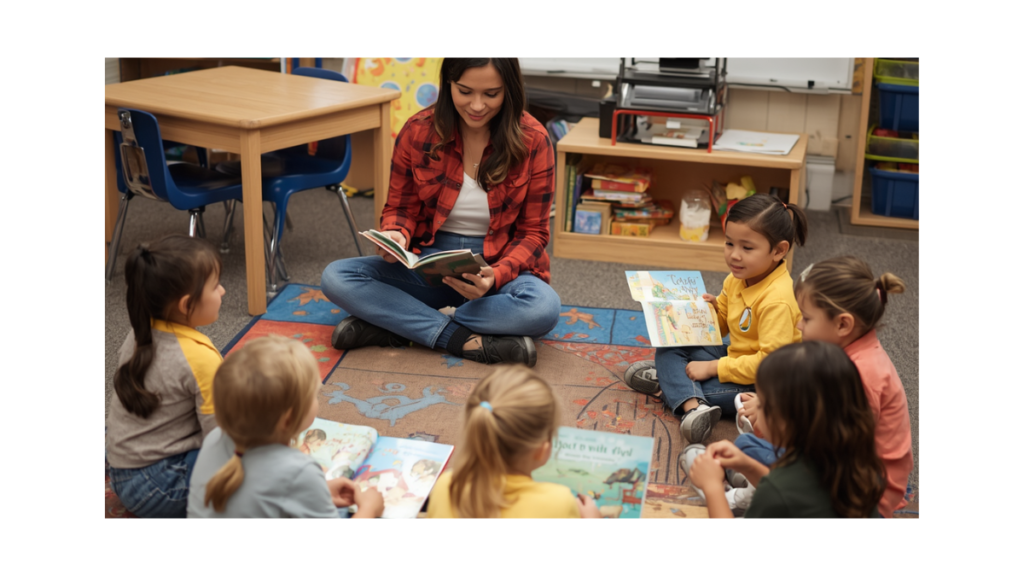
Using effective reading comprehension strategies early learners can apply helps students understand stories, build vocabulary, and develop confidence in reading. In early grades, strong comprehension skills are essential because students must learn not only how to read words, but also how to understand meaning, recall details, and think about what they read.
Teachers can strengthen reading comprehension through simple, low-tech classroom activities such as picture walks, read-aloud discussions, sequencing tasks, and story retelling exercises. These strategies encourage active participation and help students become more engaged readers.
By using consistent reading comprehension strategies in everyday lessons, teachers can create supportive learning environments that improve understanding, communication, and critical thinking skills.
These reading comprehension strategies are simple to implement in low-tech classrooms and can be adapted for different reading levels. By using interactive discussions, visual supports, and hands-on activities, teachers can help early learners develop stronger understanding and confidence while reading.
1. Use Picture Walks Before Reading
Picture walks help students make predictions before reading a story.
Before beginning:
- Show students the cover and illustrations
- Ask what they think the story is about
- Encourage students to describe what they notice
This activates prior knowledge and helps students engage with the text before reading begins.
2. Ask Questions During Reading
Questioning is one of the most effective reading comprehension strategies for early learners.
Pause during reading to ask:
- What is happening in the story?
- Why do you think the character feels that way?
- What might happen next?
Simple questions encourage active thinking and improve understanding.
3. Encourage Story Retelling
Retelling helps students organize information and remember important details.
After reading:
- Ask students to retell the story in order
- Encourage them to name the beginning, middle, and end
- Use pictures or sequence cards for support
This strategy strengthens comprehension and oral language skills.
4. Use Graphics Organizers
Graphic organizers help students visually organize ideas from a story.
Simple organizers may include:
- Story maps
- Character charts
- Beginning-middle-end organizers
These tools help students focus on important information while reading.
5. Practice Sequencing Activities
Sequencing activities help students understand the order of events in a story.
Try activities such as:
- Arranging picture cards in order
- Matching sentences to events
- Discussing what happened first, next, and last
Sequencing strengthens memory and comprehension skills.
6. Use Read-Aloud Discussions
Read-aloud sessions create opportunities for meaningful discussion and comprehension practice.
During read-alouds:
- Model thinking aloud
- Discuss unfamiliar vocabulary
- Encourage students to share opinions and ideas
These conversations help students connect deeply with the text.
7. Connect Reading to Real-Life Experiences
Students understand stories more easily when they can relate them to their own lives.
For example:
- Discuss similar experiences students may have had
- Relate story events to classroom situations
- Encourage personal connections during discussion
Making connections improves engagement and understanding.
Common Mistakes to Avoid
When teaching reading comprehension to early learners, avoid:
- Asking only yes/no questions
- Reading without discussion
- Moving too quickly through stories
- Focusing only on word recognition
Students need opportunities to think, discuss, and explain ideas to build comprehension skills effectiviely.
Putting These Strategies Into Practice
To successfully use reading comprehension strategies early learners can understand, focus on consistency, discussion, and active participation. Begin with simple questioning, picture walks, and sequencing activities before introducing more complex comprehension tasks.
By combining read-alouds, visual supports, and engaging classroom discussions, teachers can help students build strong comprehension skills and confidence in reading.
Explore More Teaching Resources
Support early learning with these related resources:
- How to Differentiate Instruction in a Low-Tech Classroom
- Practical Low-Tech Math Teaching Strategies
- Morning Routines That Boost Student Focus
These strategies help create supportive, engaging learning environments across subjects.