
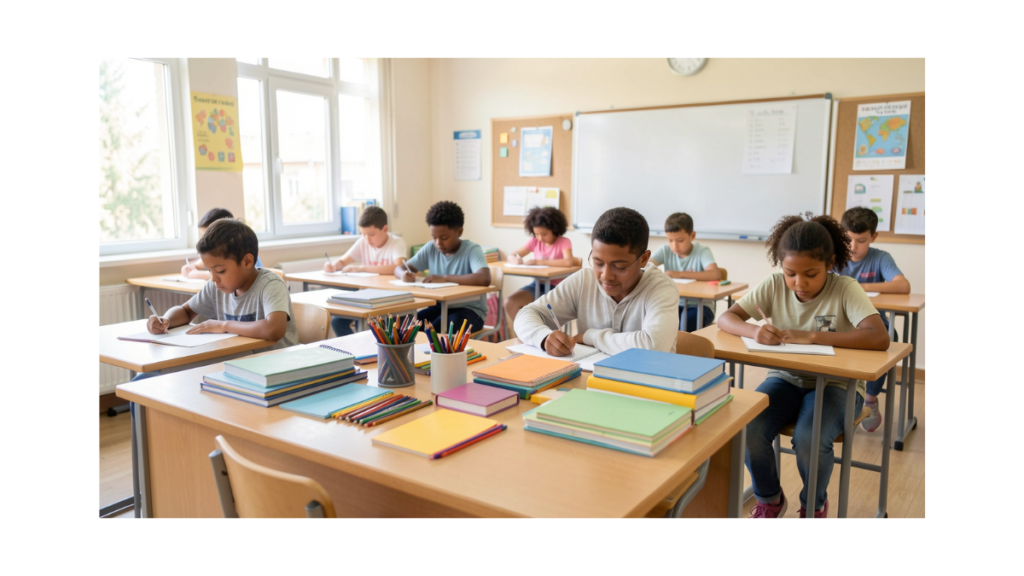
Keeping students focused in the classroom can be challenging, especially when technology is limited. These low-tech strategies help reduce classroom distractions while creating a calm and structured learning environment that supports focused learning for all students.
Why Reducing Classroom Distractions Matters
Distractions reduce learning efficiency and classroom engagement. By implementing low-tech strategies, teachers can create a predictable and organized classroom where students thrive.
1. Establish Clear Visual Routines
Predictable routines give students a sense of structure. Use visual schedules or posted daily plans to guide students through:
- Warm-up activities
- Lesson segments
- Independent practice
- Review
Students focus better when they know what comes next.
2. Minimize Visual Clutter
Overly decorated walls or scattered materials can overstimulate students. Keep bulletin boards intentional and store unused materials out of sight to maintain mental clarity and reduce distractions.
3. Create Structured Work Zones
Designate areas for specific activities:
- Independent reading
- Group work
- Quiet writing
- Teacher-led instruction
When students associate spaces with purpose, distractions naturally decrease.
4. Use Printable Guided Practice
Unstructured downtime often leads to distraction. Organized printable classroom worksheets help students move directly into meaningful practice.
Explore our Printable Classroom Worksheets.
Structured materials reduce confusion, increase engagement, and encourage independent learning.
5. Teach Transition Procedures Explicitly
Transitions are prime times for distractions. Model how to move between stations, practice silent transitions, and set time expectations. Repetition builds habit; habit reduces disruptions.
6. Limit Noise at the Source
Noise is a major distraction. Try:
- Soft start routines
- Quiet signals (raised hand, countdown)
- Assigned discussion roles
Low-tech classroom management focuses on prevention, not constant correction.
7. Establish Clear Expectations and Boundaries
Students thrive with consistent rules. Post simple classroom expectations like:
- Raise your hand before speaking
- Complete tasks before moving on
- Stay in your assigned area
When expectations are visible and reinforced daily, distractions decrease naturally.
Take Action Today
Reducing classroom distractions doesn’t require expensive tech. By creating structure, predictable routines, and using low-tech tools like printable worksheets, you can improve classroom focus and engagement.
Explore our Printable Classroom Worksheets to find structured materials that support distraction-free learning.