
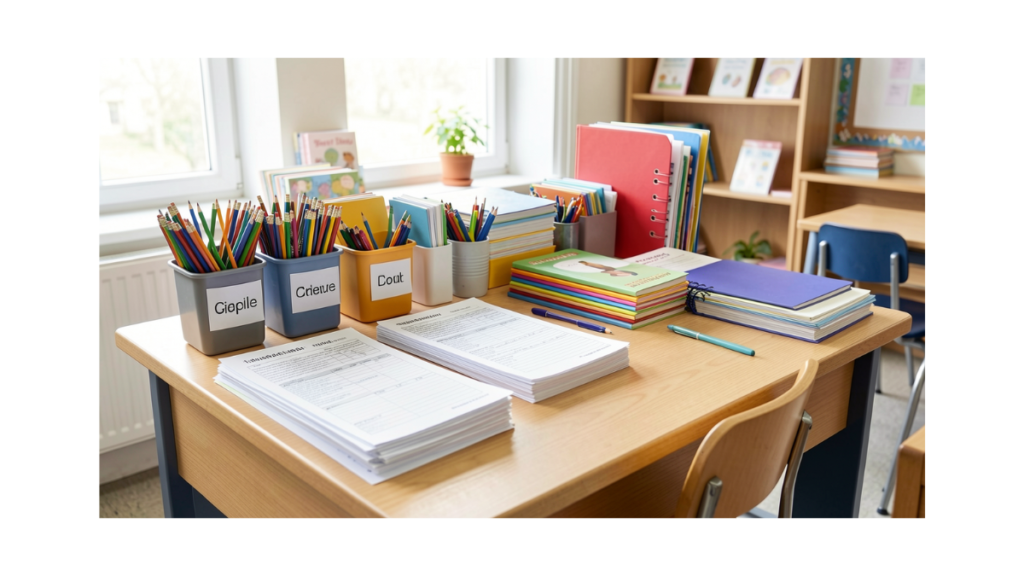
A well-organized classroom makes teaching easier, learning smoother, and low-tech strategies more effective. You don’t need expensive tools or digital systems – just smart planning, clear routines, and structured materials.
Here are five easy ways to organize your classroom for low-tech teaching, plus tips to keep your resources accessible and your students engaged.
1. Create Designated Learning Areas
Designate separate areas in your classroom for different activities:
- Reading corner
- Math station
- Writing or creative area
- Hands-on practice area
Why it works:
- Students know where to go for each activity
- Reduces distractions and confusion
- Supports independent work
Tip: Use clear labels, colored bins, or floor markers to differentiate spaces.
2. Use Clear, Accessible Storage
Organize materials in bins, trays, or shelves that students can easily access:
- Label each bin with content (e.g. Math manipulatives, Reading Worksheets)
- Keep frequently used items at student level
- Use transparent containers for quick visual access
Why it works:
- Saves time searching for materials
- Encourages responsibility and independence
- Supports smooth classroom routines
Tip: Color-coded bins can help students quickly identify subjects or activity types.
3. Implement a Rotation or Station System
Stations allow students to rotate between activities efficiently:
- Reading station
- Writing station
- Math practice station
- Review or reflection station
Why it works:
- Reduces wait time for materials
- Keeps students moving and engaged
- Supports low-tech learning by using printables and hands-on tasks
Tip: Keep instructions at each station clear and concise. Printable station cards work great here.
4. Label Everything
Labels may seem small, but they are critical in a low-tech classroom:
- Label drawers, shelves, bins, and supplies
- Use images for younger students or ESL learners
- Update labels as materials change
Tip: Laminated labels last longer and can be reused for years.
5. Organize Printable Worksheets and Resources
Structured materials are the backbone of low-tech teaching:
- Group worksheets by subject (Reading, Math, Writing)
- Keep a master binder or digital folder for backup
- Have a clear system for daily distribution and collection
Why it works:
- Reduces clutter on desks
- Students know exactly where to find what they need
- Supports consistency in instruction
Explore our Printable Classroom Worksheets to find structured resources organized by subject.
Bonus Tips for Low-Tech Classroom Success
- Keep surfaces clutter-free – only materials needed for the lesson should be out
- Rotate materials regularly to maintain engagement
- Encourage students to help maintain order – it builds responsibility
- Post visuals schedules so students know the daily routine
Why Organization Matters for Low-Tech Teaching
In a low-tech classroom, structure is your secret weapon. Organized spaces:
- Save time and reduce stress for teachers
- Help students focus on learning
- Support Smooth, repeatable routines
- Make low-tech teaching strategies far more effective
When students know where things are and how the classroom runs, learning happens naturally.
Get Started with Printable Resources
To make your low-tech classroom even more effective, explore our Printable Classroom Worksheets. These structured materials support reading, math, and writing activities while keeping your classroom organized.